
Why EPUB?
A PDF is a picture of a printed page. An EPUB is the book itself, with text that fits whatever screen you read it on.
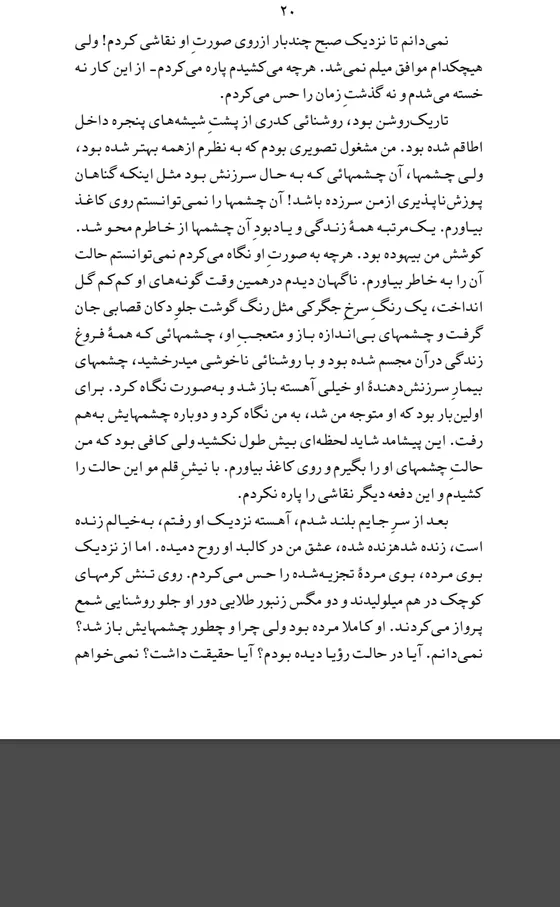
Fits your screen
A PDF shrinks the printed page to fit the screen. An EPUB’s text fits the screen instead.
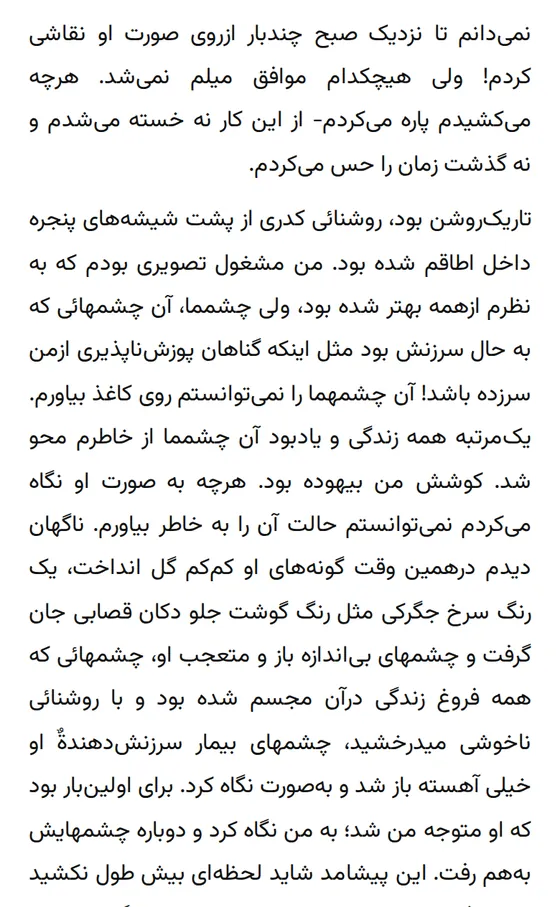
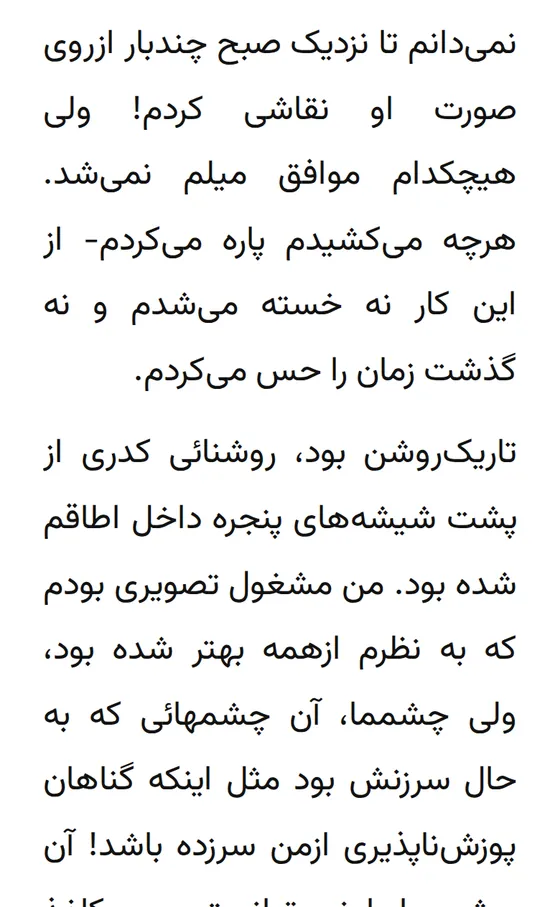
Customize font & size
Pick a font and make the text as big as you like; the lines rewrap and the pages follow.
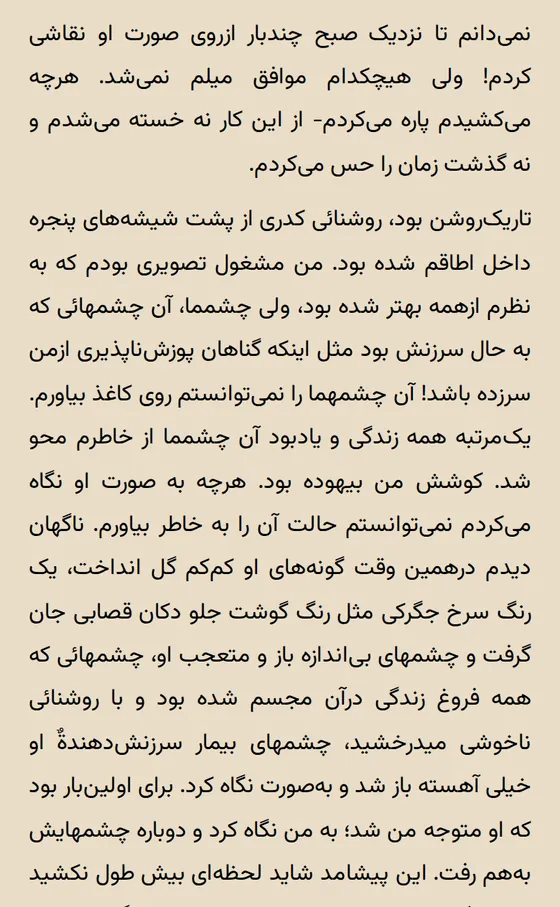
Day or night
Warm paper by day, light text on black at night.
And more:
- Any device: the same EPUB reads well on a phone, a tablet, a computer or an e-reader (Kobo, Boox, PocketBook…). A PDF is only comfortable where its page fits.
- Kindle too: since 2022 Send to Kindle takes EPUB and converts it for the Kindle (here’s how).
- Screen readers can read an EPUB aloud. A PDF, especially a scan, is often silent.
- Copy and search: an EPUB holds real text in the right order. Text copied from most Farsi PDFs comes out backwards.
- Size: an EPUB is usually under a megabyte. Scanned PDFs often run to tens.
Where EPUB came from
EPUB is the open standard for ebooks: Apple Books, Google Play Books, Kobo and most reading apps use it, and no single company owns it. It began in 1999 as Open eBook, one format publishers agreed to share. EPUB 3 (2011) rebuilt it on the web’s HTML and CSS, with right-to-left page order for languages like Farsi, and since 2023 it has been a W3C standard, like the web itself.
EPUB and Farsi
Most Farsi books circulate as scanned PDFs, and the store apps keep theirs locked inside their own apps. EPUB 3 handles right to left properly, but reading apps still vary, especially on Android, which is why every book converted here can also be read right in your browser.